AI Music
Can You Copyright AI Music? (2026)
You made a track with AI, it is genuinely good, and now you want to know if it is yours. The answer surprises most people: you can probably sell it, but you probably cannot copyright it.
Here is what copyright actually covers for AI music in 2026, what protects your track instead, and how to give yourself the strongest position. None of this is legal advice.
The short version
Music generated purely from a prompt is not copyrightable — the US Copyright Office requires meaningful human authorship. Human-made parts can be protected; the AI parts cannot.
What protects a pure-AI track is your generator’s commercial license, not a copyright. It lets you distribute and earn — so clean it, disclose, and release.
Can you copyright AI music?
For a track generated purely from a text prompt, no. The dividing line is human authorship.
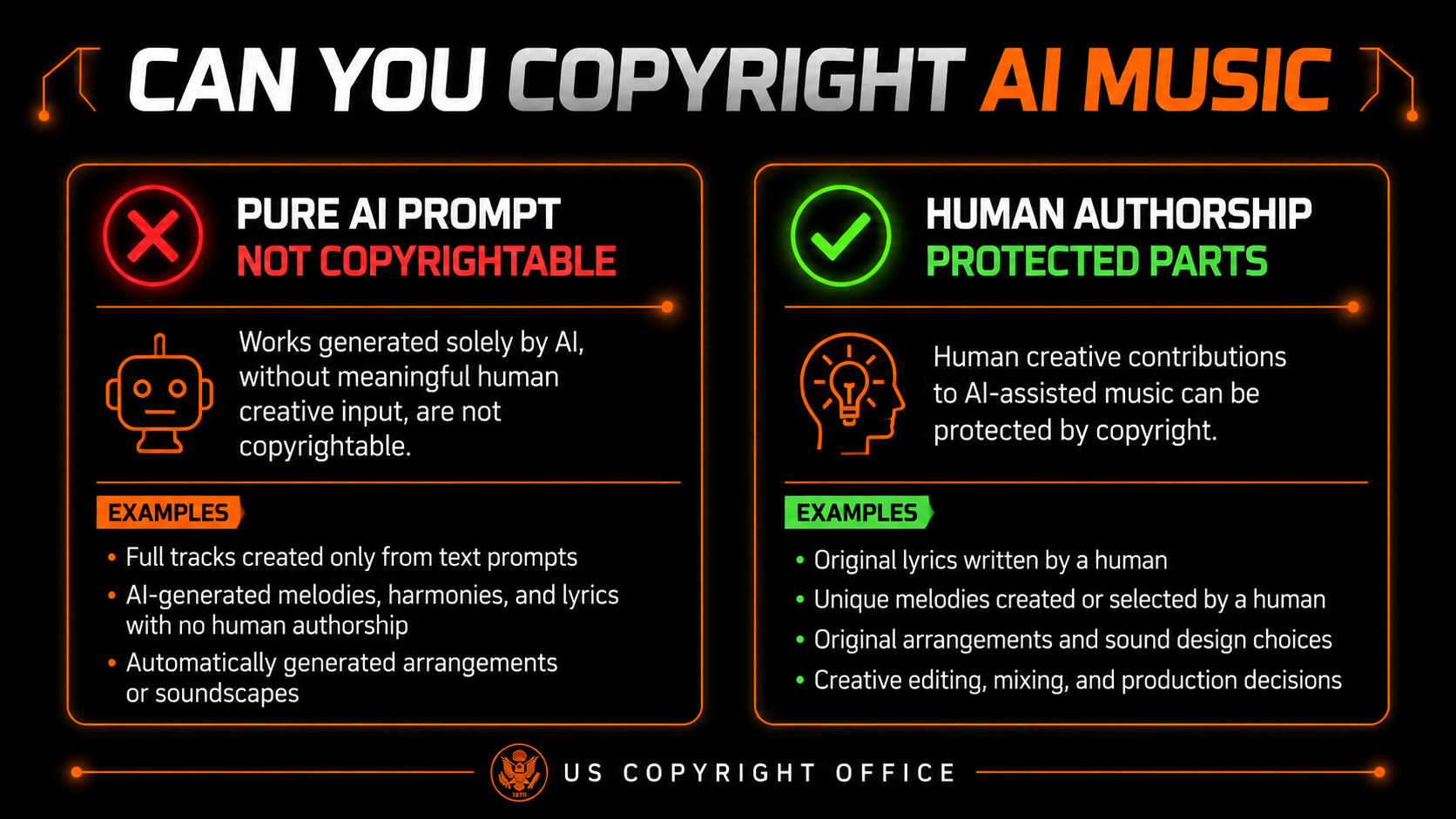
In its 2025 guidance, the US Copyright Office was clear that works produced solely by AI, without meaningful human creative input, are not copyrightable — and that prompts alone do not give a human enough control to count as the author. Music with genuine human authorship can be registered, but only the human-made elements are protected; the AI-generated portions are disclaimed.
Why pure AI music isn’t protected
Copyright protects human creativity. When a model turns a prompt into a finished song, the creative choices that matter legally — the specific melody, arrangement and performance — were made by the system, not by you. Typing a detailed prompt is instruction, not authorship, in the Office’s current view. So there is nothing for a copyright to attach to, which also means anyone could reuse a pure-AI track without infringing.
What actually protects your track
If not copyright, then what? For most AI musicians, the real protection is contractual, not statutory.
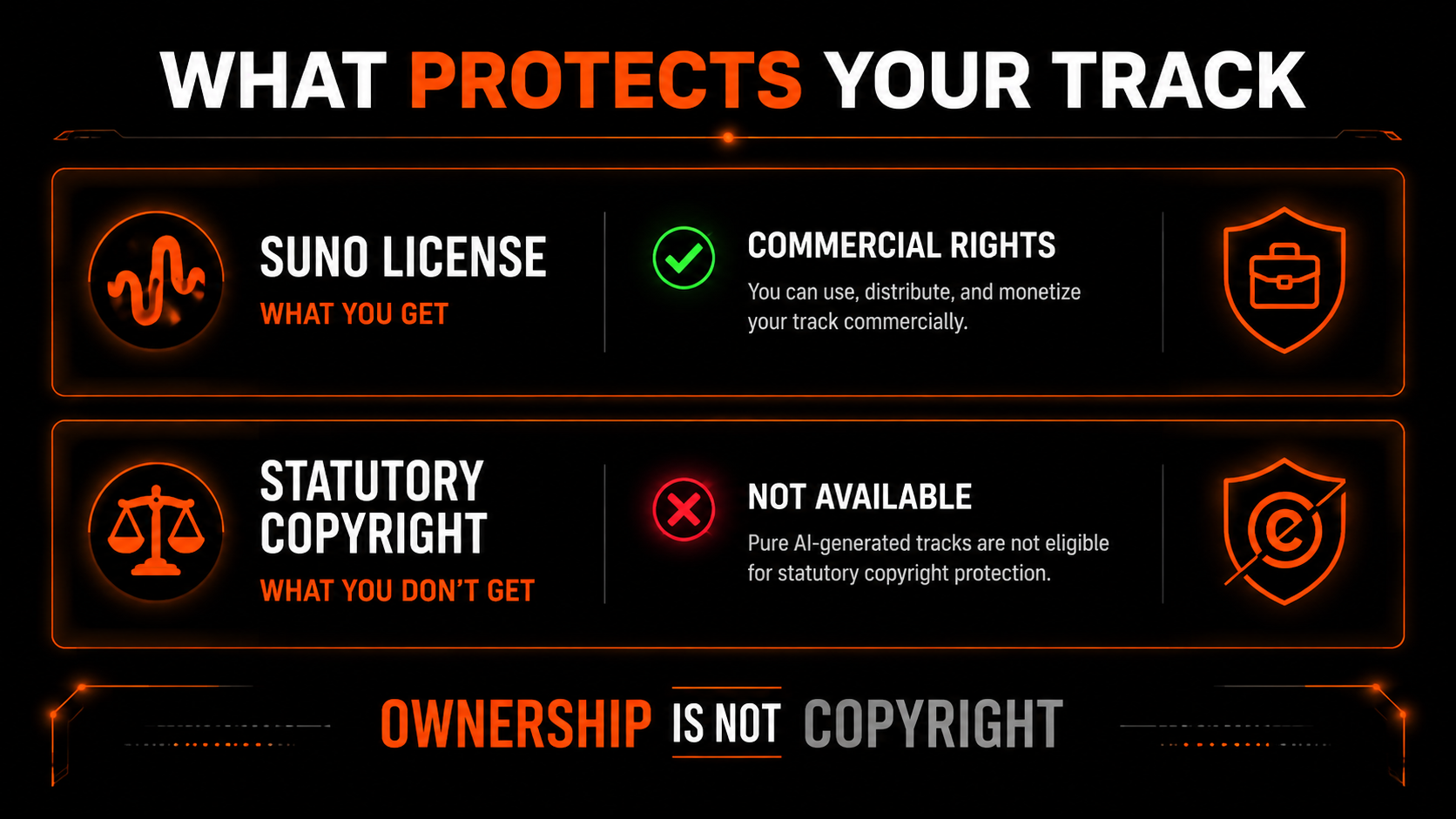
On a paid Suno plan you hold a commercial license to your track — you can distribute it, monetize it, and keep the earnings. That is ownership in a practical sense, but it is not a statutory copyright, which is simply not available for pure-AI output. The distinction matters: a license lets you release and earn, but it does not let you sue someone who copies the track.
How to protect your AI music
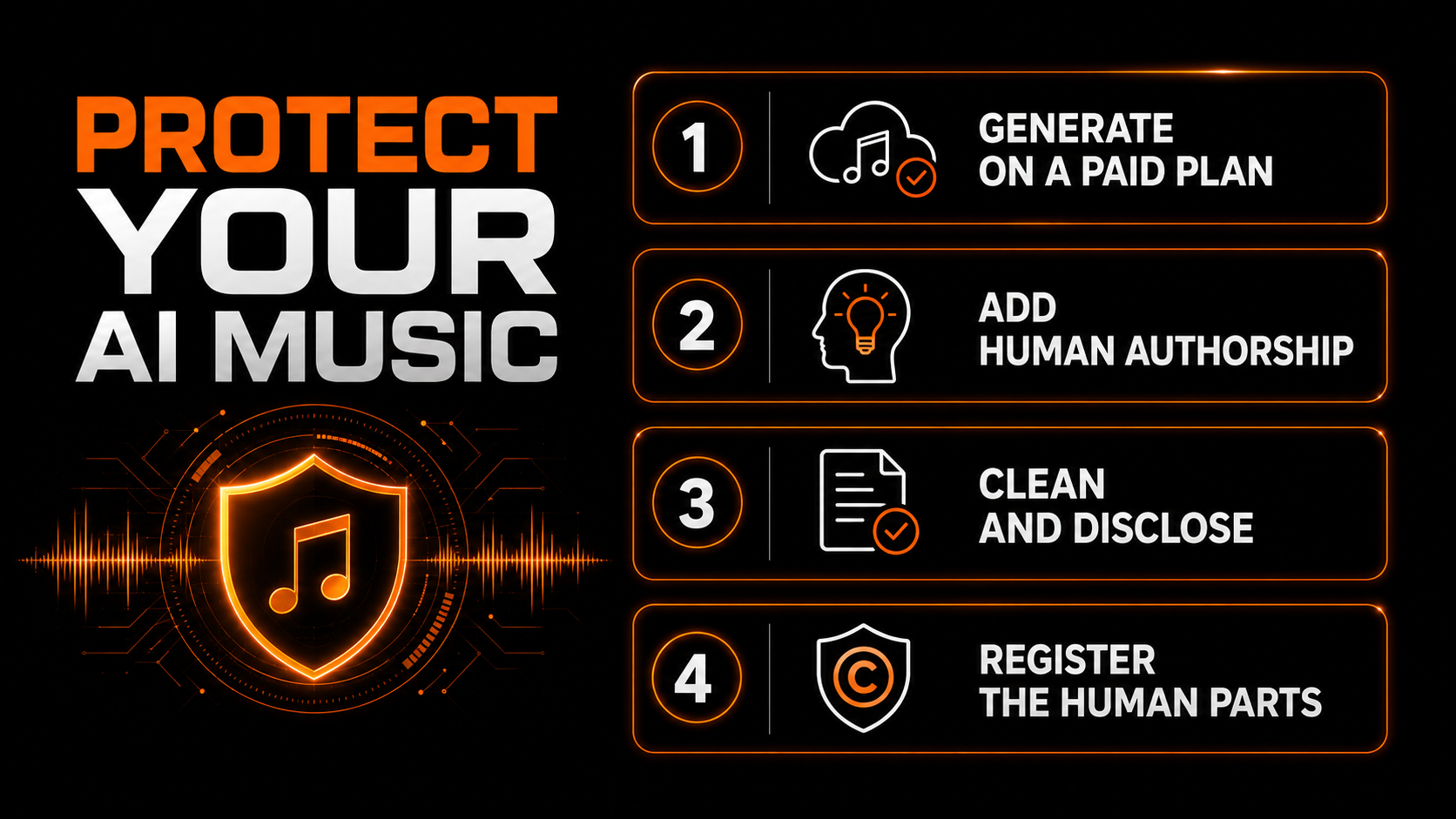
Create the track while subscribed to a paid tier so you actually hold the commercial license.
Write your own lyrics, shape the arrangement, and make real creative edits — the parts a copyright can attach to.
Strip the AI markers so the track passes distribution, and disclose AI use honestly where asked.
If it matters to you, register the human-authored elements, with the AI portions disclaimed.
Clean and distribute what you own
Copyright or not, if you want the track live and earning it still has to pass distributor detection — and a raw AI export will not. It carries the same inaudible watermark and fingerprint every generated track does.
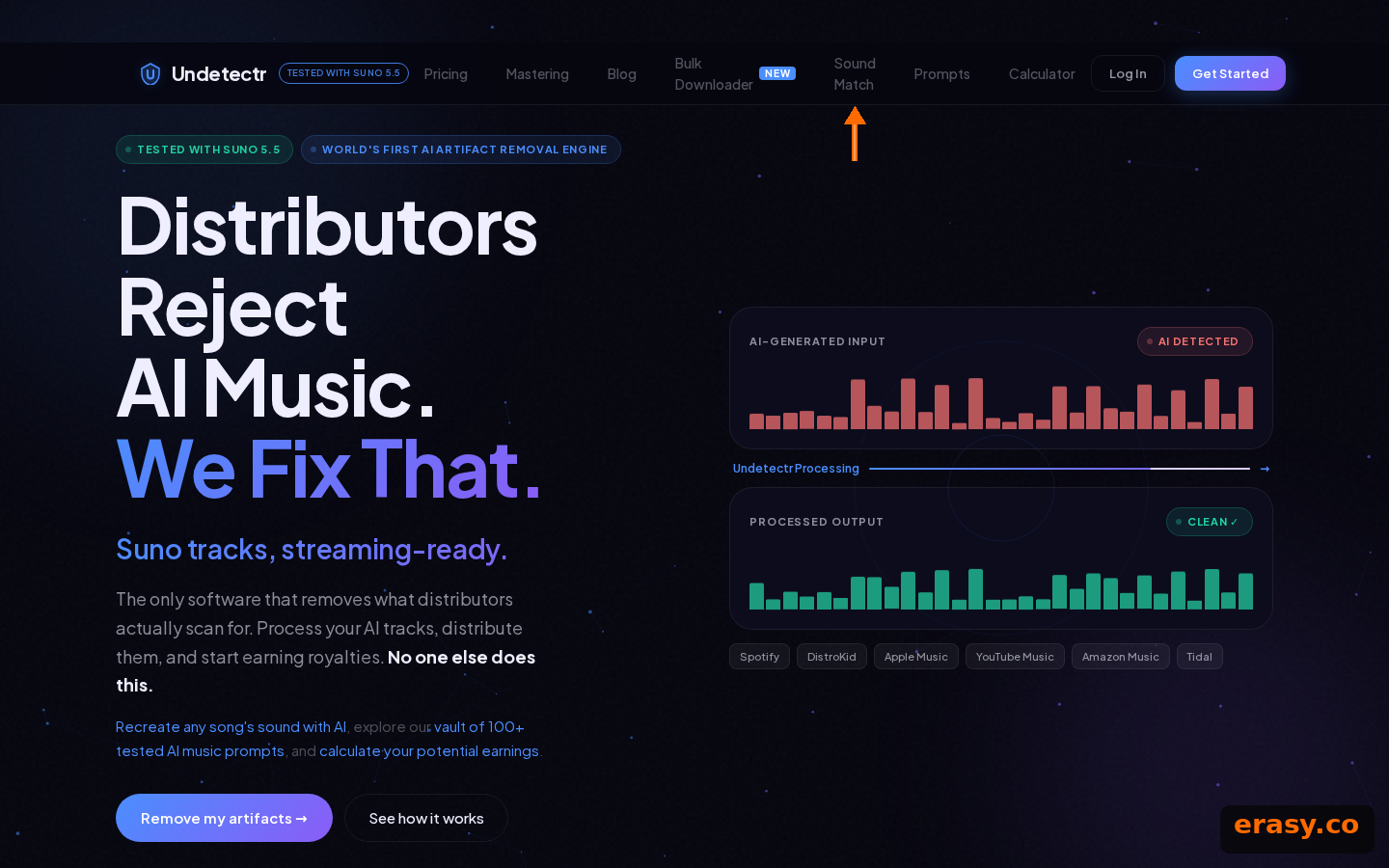
Undetectr — the only AI watermark remover built for music — strips those markers and masters the file to streaming spec in one browser pass, so the track you licensed can actually be distributed. It is release prep, entirely separate from the copyright question.
Our recommended tool
Own the license? Now make it distributable.
Clean the markers, master to spec, and clear the gate on upload. Try Undetectr free — no credit card, 150+ platforms.
Keep reading