AI Music
How to Monetize AI Music on YouTube (2026 Rules)

You can absolutely earn ad revenue from AI music on YouTube — the platform does not ban it. But between you and a monetized channel sit four gates: the Partner Program bar, the AI disclosure rules, the inauthentic-content policy, and Content ID. Miss one and the money stops.
Here is the 2026 playbook for monetizing AI music on YouTube without getting demonetized or claimed.
The short version
AI music can earn on YouTube if you clear the Partner Program (1,000 subs + 4,000 watch hours), disclose synthetic content where required, and avoid mass-produced uploads.
The sleeper risk is Content ID — AI tracks can collide with registered references. Cleaning the file helps, but checking for overlaps is still a manual job.
Can you actually monetize AI music?
YouTube is one route of several. For the comparative arithmetic across streaming, direct sales and sync, see Suno Watermark’s breakdown of what each route actually pays.
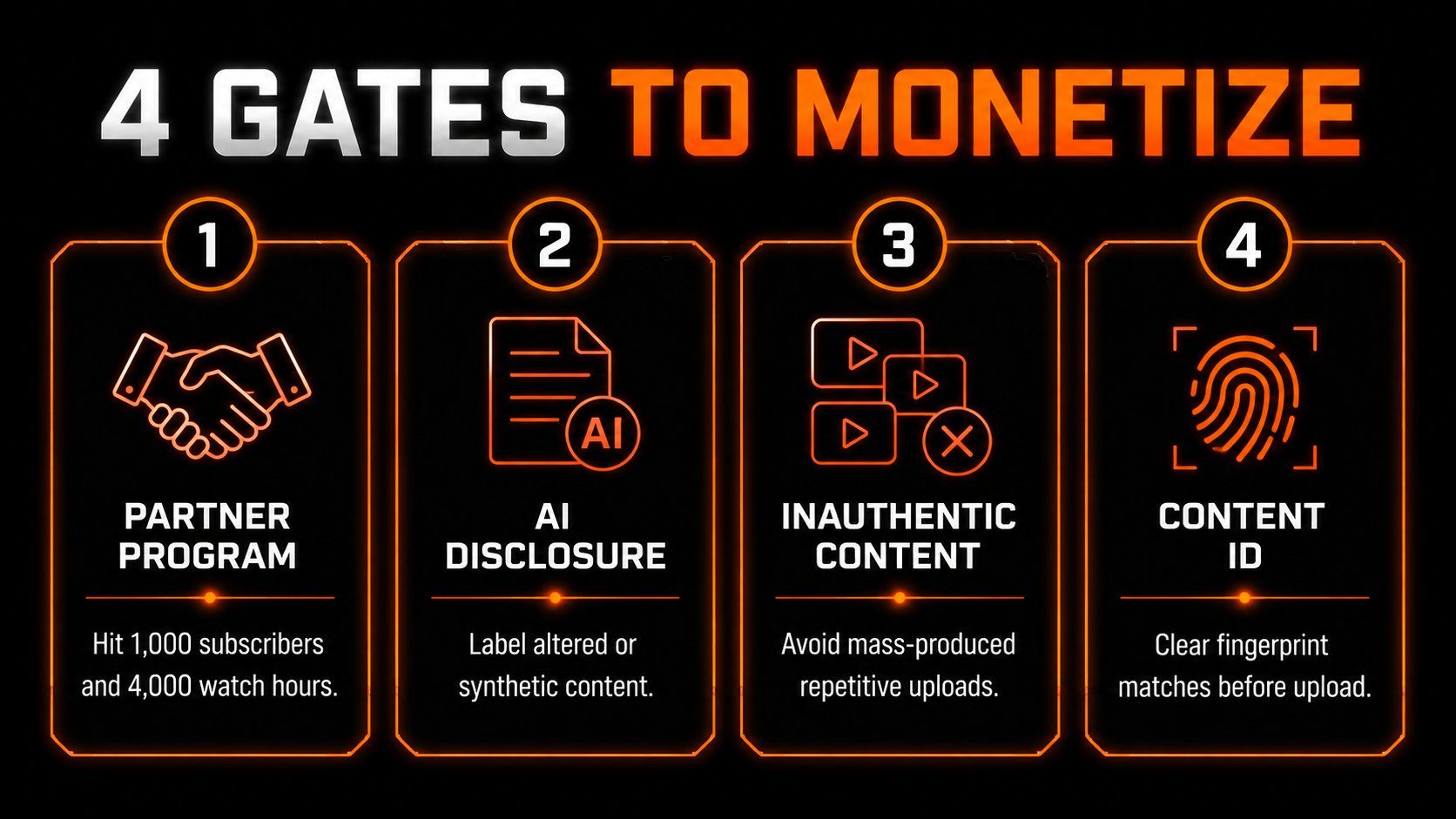
Yes. YouTube treats AI-generated content as eligible for monetization as long as it meets the usual rules and adds genuine value. There is no blanket ban on AI music. What YouTube penalises is low-effort, mass-produced content — which is a behaviour, not a technology. Put differently: AI is fine; spam is not.
The Partner Program bar
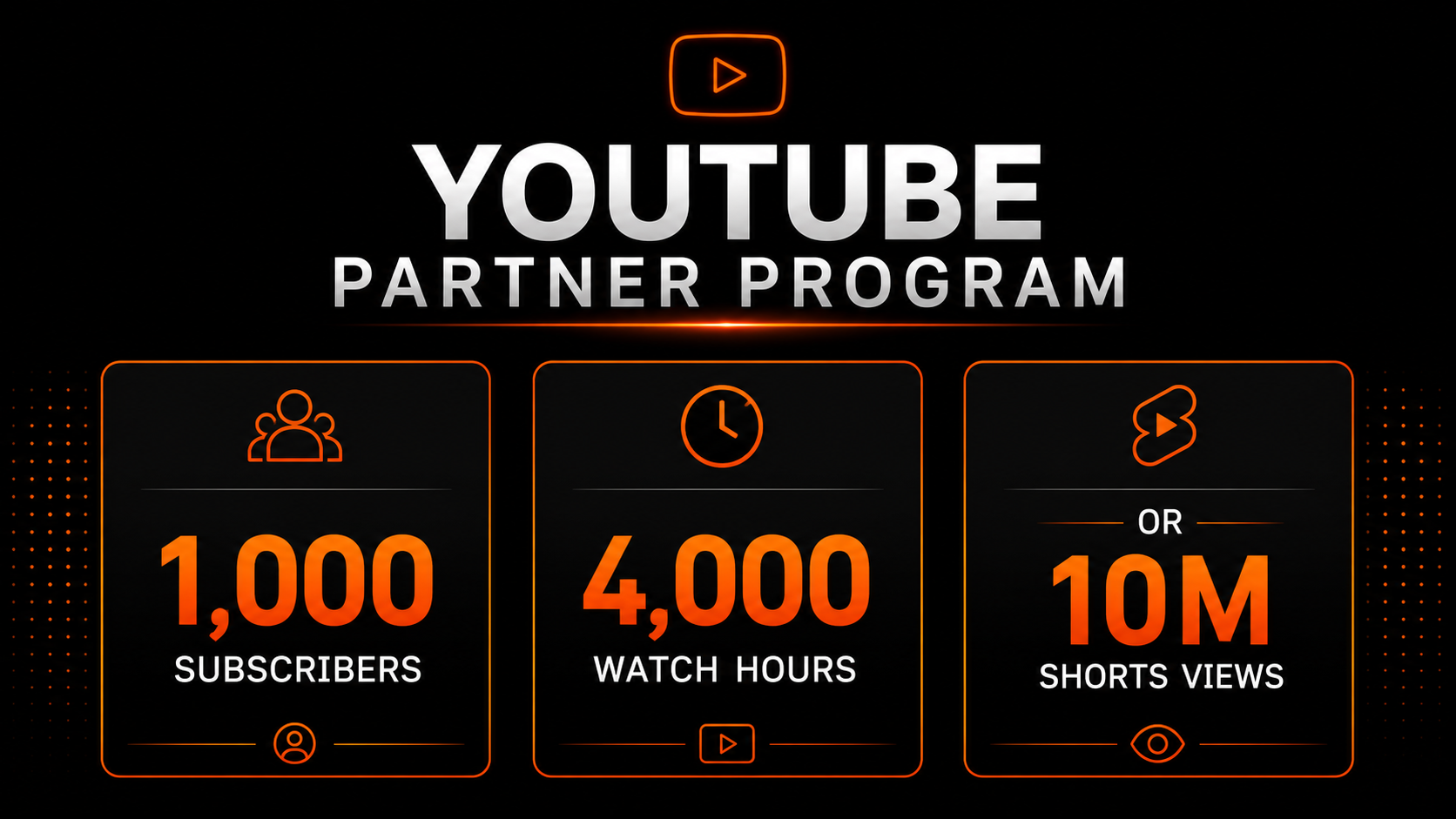
Before any monetization, you have to get into the YouTube Partner Program. The thresholds in 2026 are unchanged:
| Requirement | Threshold |
|---|---|
| Subscribers | 1,000 |
| Watch hours OR Shorts views | 4,000 public watch hours (12 mo) OR 10M Shorts views (90 days) |
| Location | An eligible country/region |
| Standing | No active Community Guidelines strikes |
| Account | Linked, active AdSense |
AI disclosure rules
YouTube’s altered or synthetic content policy asks creators to disclose realistic content that has been meaningfully altered or synthetically generated — most sharply for realistic depictions of real people, places or events. When you disclose, YouTube adds a label in the expanded description, and a more prominent one on the player for sensitive topics.
For purely instrumental AI music the hard requirement is lighter than for a realistic AI voice or deepfake, but disclosure is recommended, and anything made with YouTube’s own AI tools is labelled automatically. The safe rule: when in doubt, disclose.
The inauthentic-content trap
This is where most AI music channels die. In July 2025, YouTube renamed its “repetitious content” policy to “inauthentic content” to make clear it covers mass-produced and repetitive uploads — think dozens of near-identical tracks over a static image, cranked out with minimal human input.
That kind of content has never been monetizable, and the rename sharpened enforcement. To stay eligible, each upload needs genuine human value — original arrangement, real curation, commentary, visuals, variety. Volume alone is a liability, not a strategy.
Content ID and fingerprint collisions
Even a monetized, disclosed, original channel can lose revenue to Content ID. Every upload is scanned against a fingerprint database, and a match hands control to whoever registered the reference — they can claim, monetize, or block your video.
AI music is unusually exposed to false matches: shared stems, common sample packs, stock-music libraries that mass-register tracks, and near-duplicates of existing releases can all trigger a claim. That is why checking for an overlap before you publish matters, rather than after your ad revenue gets redirected. No AI cleanup tool performs that check, so search the major services for your melody and title yourself. Cleaning the track’s fingerprint with a tool like Undetectr reduces the AI-detection half of that risk.
The safe-upload workflow
Hit 1,000 subs and 4,000 watch hours (or 10M Shorts views), with clean standing and AdSense linked.
Original arrangement, curation or visuals per upload — never mass-produce near-identical tracks.
Run tracks through Undetectr to clean the markers, then manually search existing releases for Content ID overlaps.
Disclose synthetic content where required, then upload and monetize.
Our recommended tool
Protect your revenue before you upload
Clean your track's detection markers before a claim costs you revenue. Try Undetectr free — no credit card, 150+ platforms.
Keep reading