AI Music
Can You Sell AI-Generated Music in 2026? Where & What It Pays

A producer uploads a finished AI track to a distributor, waits, and gets nothing — flagged on the way in, or live for two weeks and then pulled with the earnings withheld. Meanwhile the same track, sold direct, could have paid on day one, and pitched to a sync brief could have earned $120 to $3,000 from a single placement. So can you sell AI-generated music? Yes — but where you sell it decides whether you get paid.
This is the definitive guide: the legal answer, which platforms flag AI tracks, the streaming-versus-sync math worked out in full, and the three real routes to money — with honest pros and cons for each. By the end you will know exactly where to sell your AI music and what each route actually pays.
Key takeaways
- • Yes, you can sell AI music — but only from a paid generator plan. Free Suno and Udio tiers are non-commercial.
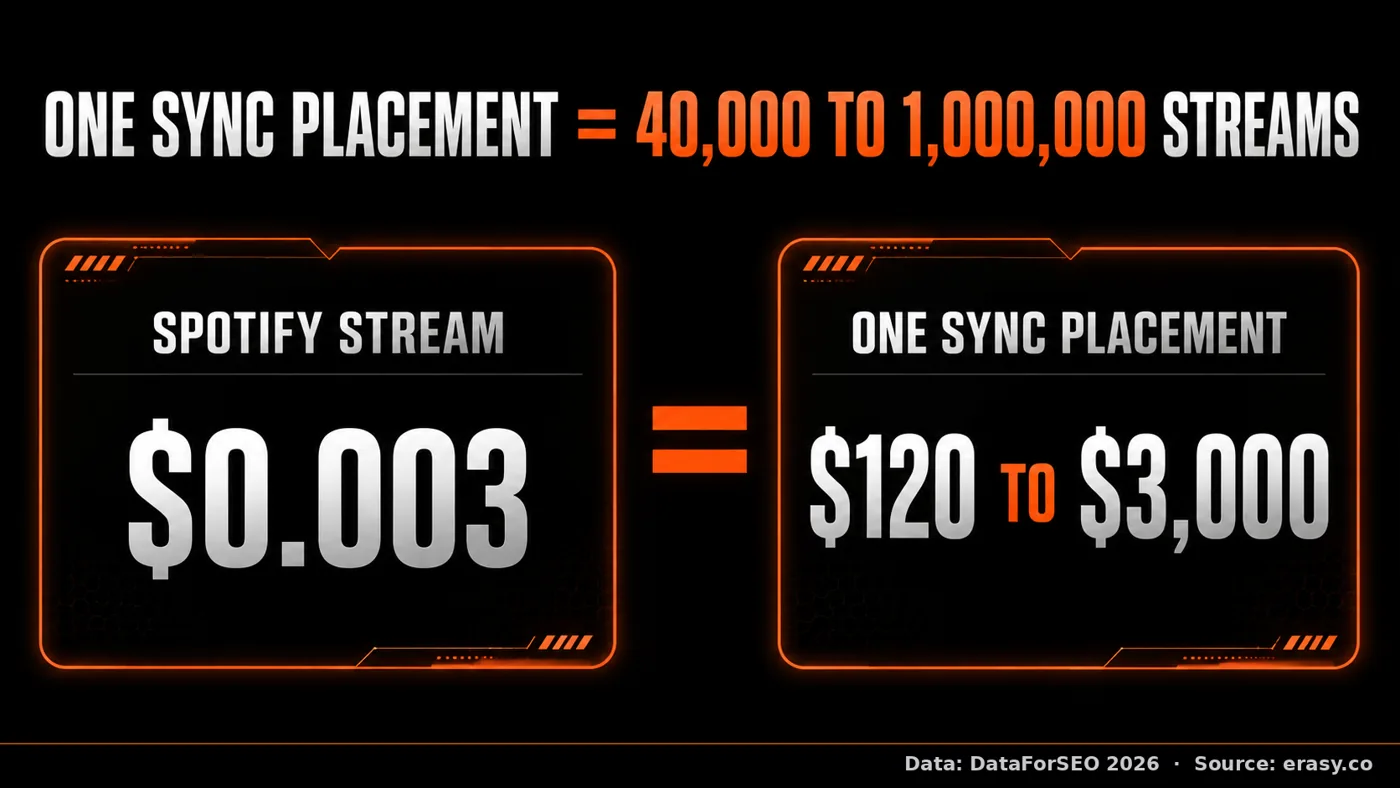
- • Streaming pays about $0.003 a stream; one sync placement pays $120–$3,000 — worth 40,000 to 1,000,000 streams.
- • Distributors are split: DistroKid and Amuse allow AI (with disclosure); TuneCore and CD Baby reject fully-AI tracks.
- • Spotify only pays a track once it clears 1,000 streams in 12 months — most AI tracks never do.
- • A flagged file earns $0. Clear the detection markers before you upload.
- • The only route with 0% commission and no AI gatekeeping is a direct storefront plus sync briefs.
The short answer: yes, if you own it
You can legally sell AI-generated music as long as you hold the commercial rights to it. For Suno and Udio, that means one thing: you generated it on a paid plan. Suno’s terms grant commercial-use rights to songs made while subscribed to Pro or Premier, while free-plan songs are personal, non-commercial use only — and subscribing later does not retroactively license them.
Ownership has a wrinkle, though. In January 2025 the US Copyright Office ruled that music generated purely from a prompt lacks the human authorship a copyright requires. So you can sell the track commercially, but you generally cannot register or defend a copyright on the AI-made parts. We unpack that fully in can you copyright AI music. The practical upshot: selling is fine; the real obstacle is distribution.
Why AI tracks get flagged and killed
The reason so many AI releases earn nothing is not the law — it is automated screening. Every export from Suno or Udio carries inaudible markers (SynthID-style watermarks, C2PA credentials, spectral fingerprints), and distributors and platforms scan for them. A match can mean rejection at upload, a delayed takedown weeks later, or frozen royalties. We cover the detection side in how AI music detectors work and surviving it in distributing AI music without getting flagged.
The failure is rarely loud. A flagged track more often goes live, earns for a few weeks, then disappears in a quiet sweep with the royalties withheld — you notice when the payout that was building simply stops. And repeated flags do not just kill individual tracks; they put your whole distributor account under suspicion, and a terminated account takes your back catalogue and release history with it. That is the real cost of treating distribution as the only route: your income sits on a threshold someone else can move overnight, without notice or appeal.
Policies are inconsistent, and that inconsistency is the trap. As of August 2026, AI disclosure has moved into the upload flow itself: DistroKid asks you to declare AI use through an “AI Credits” field, and Spotify and Apple Music surface that disclosure to listeners under the shared DDEX standard. Here is where the major routes stand.
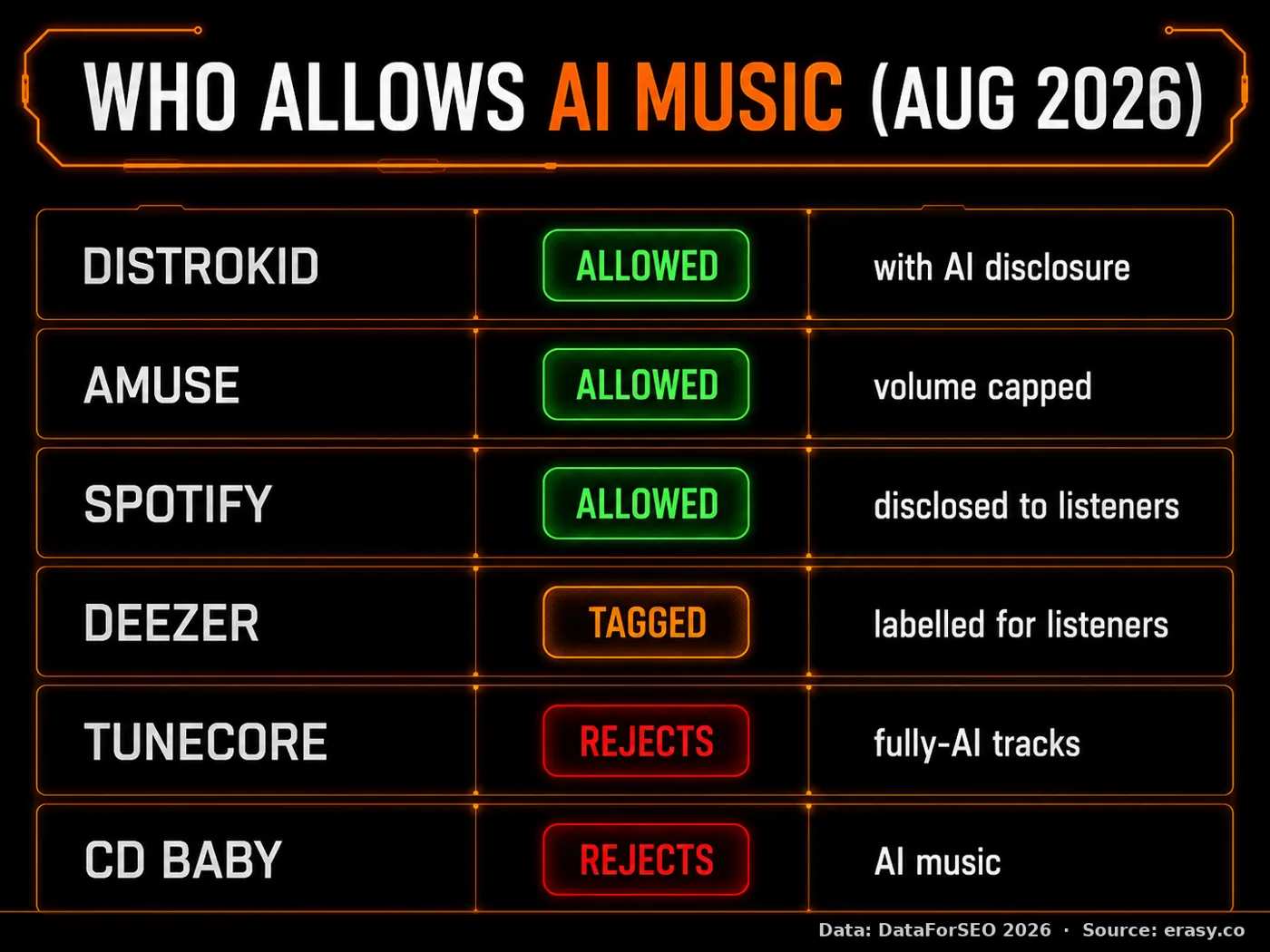
| Platform | AI music? | Note (checked Aug 2026) |
|---|---|---|
| DistroKid | Allowed | Requires AI disclosure at upload |
| Amuse | Allowed | Reported volume caps on AI releases |
| Spotify | Allowed | Discloses AI to listeners; spam filter |
| Deezer | Allowed | Tags AI tracks for listeners |
| TuneCore | Rejects | Fully-AI tracks (names Suno) |
| CD Baby | Rejects | Reported to reject AI broadly |
Sources: DistroKid, Spotify (MBW), TuneCore (Music Ally), Deezer. Amuse and CD Baby positions are as reported by industry coverage; verify against each platform before relying on them.
The through-line: even where AI music is allowed, it is scanned, disclosed, and easy to get wrong. There is one route with no scanner in the path at all, which is where you can sell your music directly and keep 100% — no upload screen deciding whether you get paid. More on that below.
The math nobody shows you: streams vs one sync placement
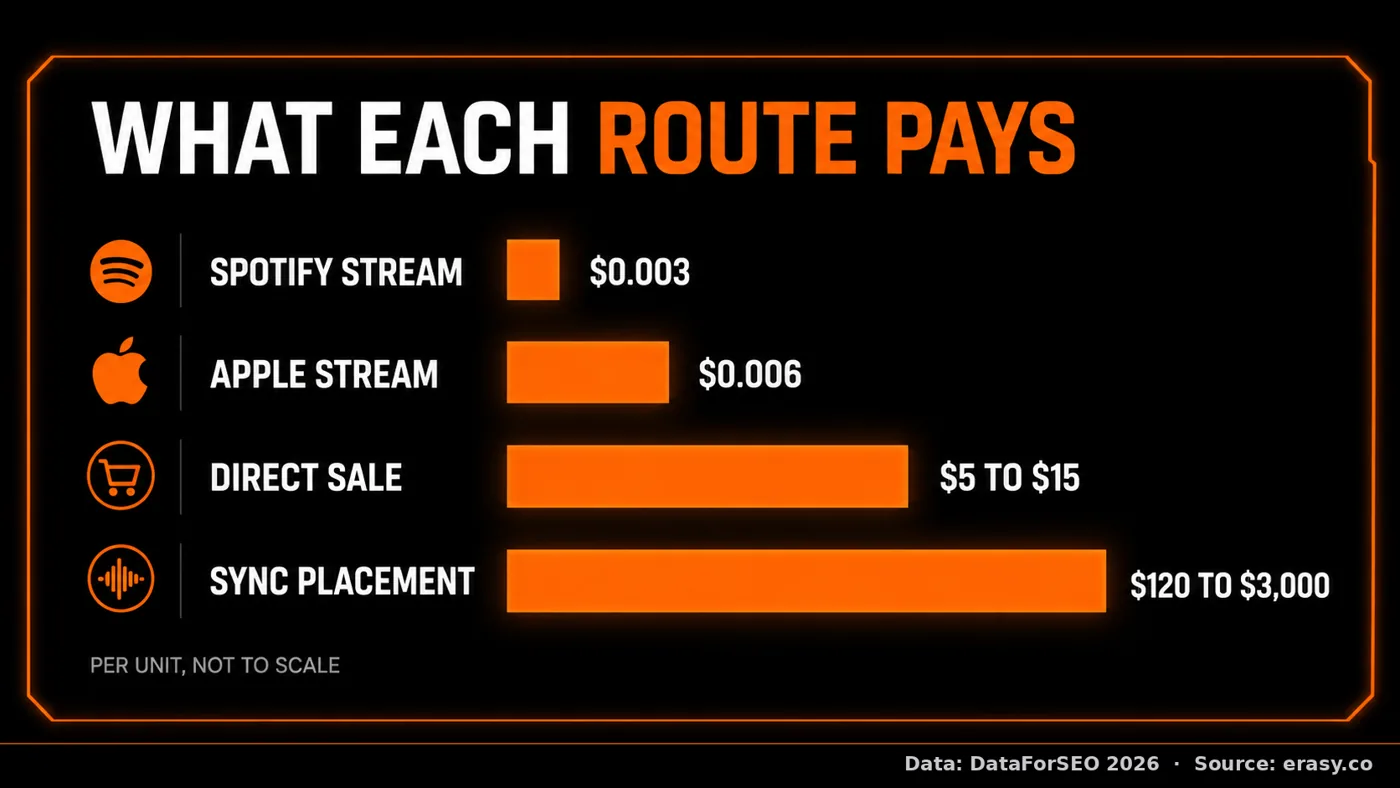
Here is the number that reframes the whole question. Streaming pays a fraction of a cent per play — independent estimates put Spotify at roughly $0.003 a stream and Apple Music around $0.006 (Duetti, 2025; Spotify publishes no official rate). A single sync placement in the $120–$3,000 range therefore equals somewhere between 40,000 and 1,000,000 Spotify streams. Here is the arithmetic.
| Route | Pays per unit | Units to earn $3,000 |
|---|---|---|
| Spotify stream | ~$0.003 | 1,000,000 streams |
| Apple Music stream | ~$0.006 | 500,000 streams |
| Direct sale ($9, you keep 100%) | $9.00 | 334 sales |
| Sync placement | $120–$3,000 | 1–25 placements |
Two assumptions stated plainly: the per-stream figures are third-party estimates that vary by listener country and plan, and Spotify only pays a track at all once it passes 1,000 streams in a rolling 12 months. Most AI tracks never clear that bar, which means their real per-stream rate is zero. A direct sale or a placement, by contrast, pays from the first unit.
Where to actually sell AI music: the three routes
There are three honest ways to sell AI-generated music, and the right mix depends on your goal — reach, income, or both. None is perfect, and it is worth being clear about where each one lets you down.
1. Streaming distribution — reach, not income
Getting on Spotify and Apple through a distributor is the default, and it is genuinely the best route for discovery. But it pays pennies, it is where the AI screening lives, and the distributor decides your fate. Use it for reach; do not expect it to pay the rent. For the AI-friendly options, see selling Suno music on Spotify and DistroKid.
2. Direct-to-fan storefront — you keep 100%
Selling straight to fans flips the economics: you set the price, you keep every cent, and no upload scanner stands between you and the money. The trade-off is that you have to bring your own audience — a storefront does not hand you listeners the way a streaming algorithm pretends to. This is the model Played.fm is built on: a direct storefront with 0% commission and, unlike the distributors above, no AI gatekeeping.
3. Sync licensing — the highest-paying route
Licensing your music to video — a YouTube channel, a podcast, an indie film, an ad — is where the real money is, because one placement pays like tens of thousands of streams. It used to require an agent and a catalogue of contacts. It no longer does: open brief boards let you pitch directly. You can submit against Played.fm’s open sync briefs — placements paying $120 to $3,000, no agent, no gatekeeper, and the platform takes no cut of the deal.
4. Stock and production libraries — volume, thin margin
Royalty-free and production libraries — the Epidemic Sounds and Artlists of the world — drop your music into a subscription pool that video makers draw from. They offer passive volume, but most pay a flat, low rate or lock your track exclusively for a term, and a growing number reject AI-generated submissions outright. Useful as a supplement, a poor primary if you own strong tracks you could license directly for more.
Here is the honest comparison, including where a storefront is not the answer.
- ✕Best for reach and discovery
- ✕Pays ~$0.003 a stream
- ✕AI screening can flag or pull it
- ✕1,000-stream threshold before any pay
- ✓Keep 100% of every sale
- ✓Sync briefs pay $120–$3,000
- ✓No AI gatekeeping, no scanner
- ✓You must bring your own audience
The realistic play is both: distribute for reach, and list your tracks on Played.fm to actually earn — direct sales plus sync. It will not solve discovery for you, and that is the honest limit of any storefront.
How to sell your AI music, step by step
The order matters. Get it wrong and you either leave money on the table or watch a track get pulled. Here is the sequence that works.
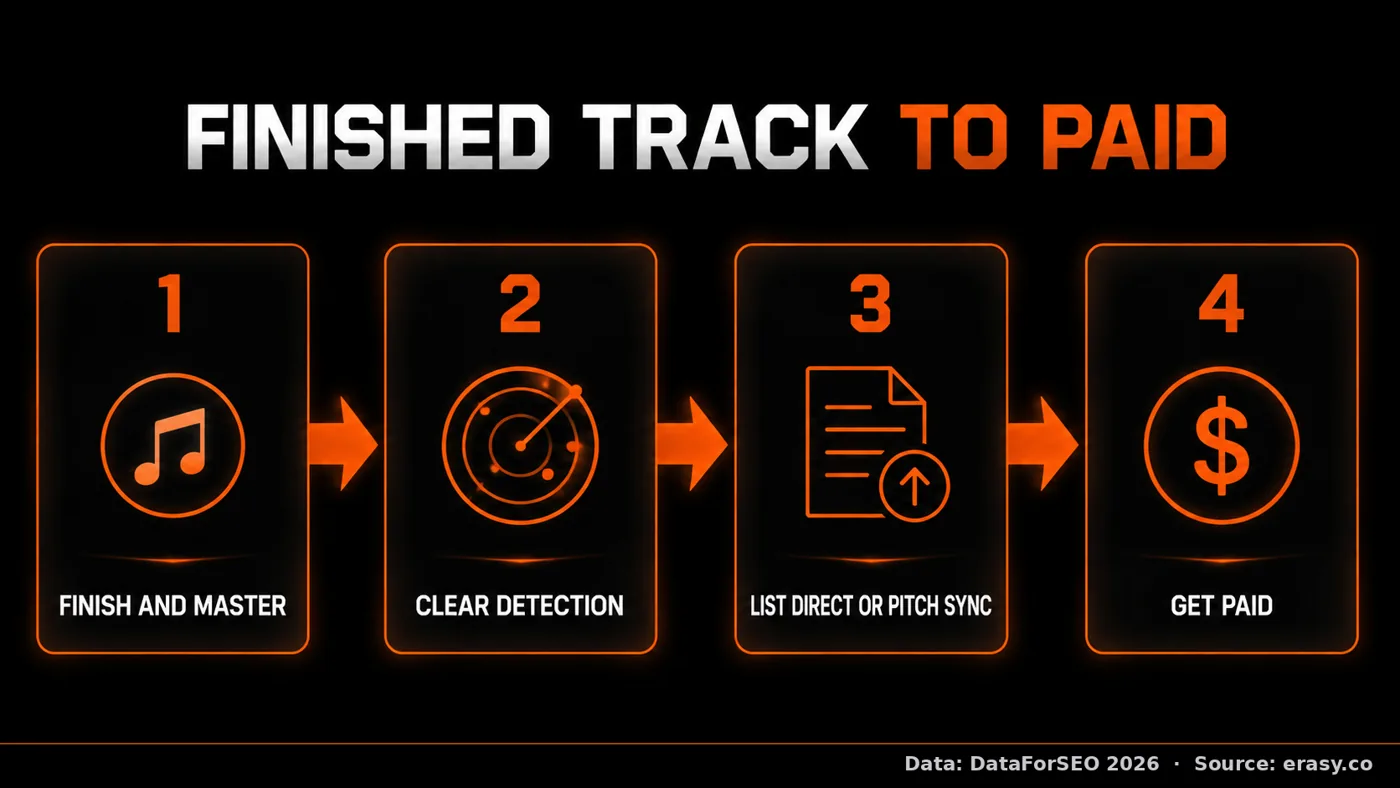
Generate on a paid plan. Free Suno and Udio tiers are non-commercial and cannot be sold.
Master to streaming loudness (around -14 LUFS) so it stands next to real releases.
Before you upload anywhere, strip the AI watermark and fingerprint so screening does not flag it.
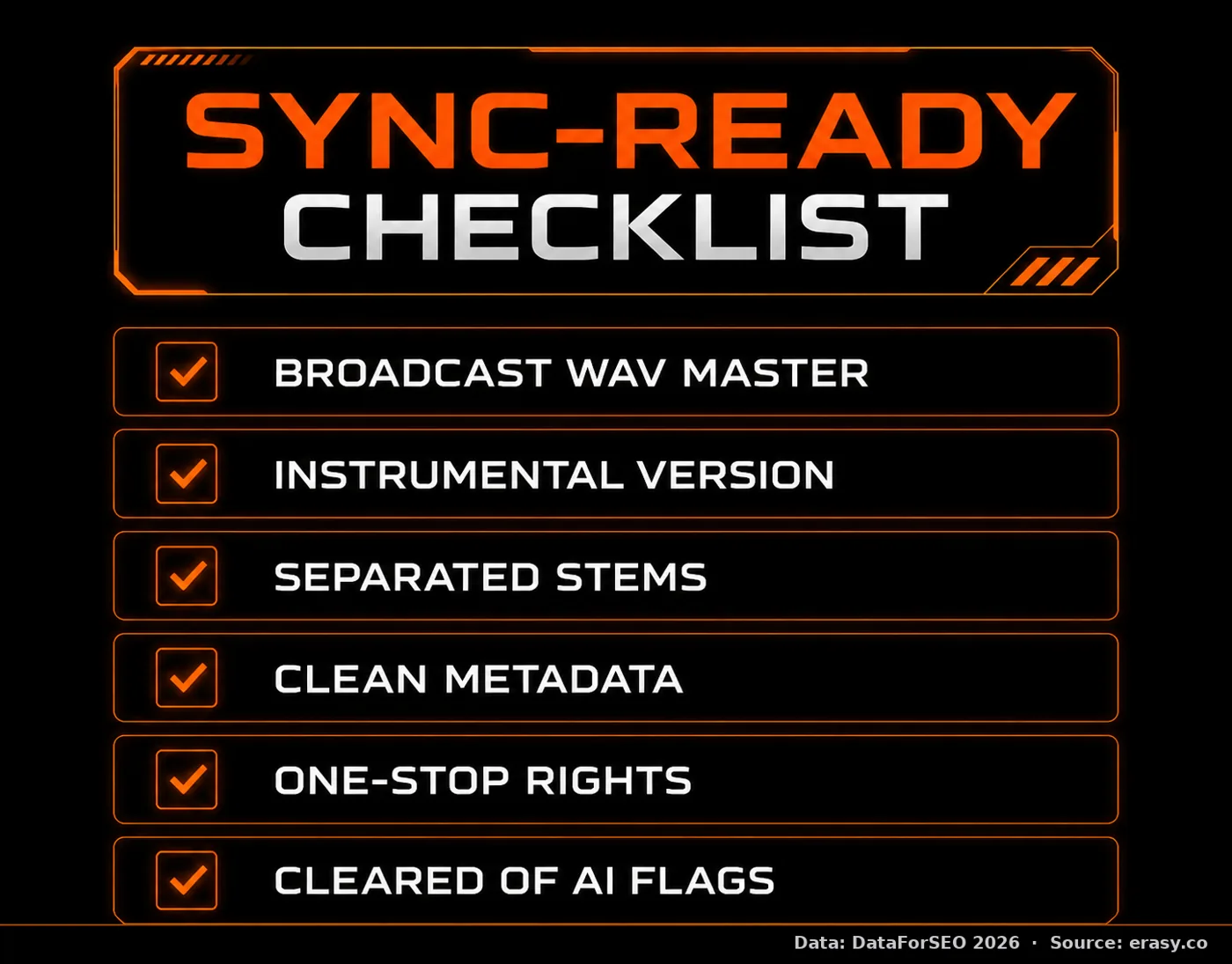
Export a broadcast WAV master, an instrumental, stems, and clean metadata — the sync-ready kit.
List on your own storefront to keep 100%, and submit to open sync briefs for placement fees.
One moment deserves a specific tool. If a distributor rejects your track for AI, re-exporting it will not help — the markers live in the waveform. A dedicated remover like Undetectr (a one-time €39 for unlimited processing) strips SynthID, C2PA and spectral fingerprints in one pass so the file reads as clean audio. Do that step once, on the finished master, before you distribute — not after a takedown.
How the sync briefs actually work
A brief is a real production posting what it needs — a mood, a length, a budget in the $120 to $3,000 range — and a deadline. You pick a track from your catalogue, add a two-line pitch on why it fits, and submit in-platform. No agent stands in the way; the person choosing the music sees your track directly, and if they pick it you license on your own terms and keep the fee. Speed decides these: the track that can be delivered today, with its instrumental and stems ready, beats the better track that cannot. That is why the checklist above is not optional.
Pricing a direct release
For direct sales, price for the fan who already likes you, not the passive streamer. A single at $1 to $3, an EP at $5 to $9, an album or a name-your-price release with a floor all work, and pre-orders let committed fans pay before release day. Because you keep every cent, a hundred direct sales at $7 outpays roughly two hundred thousand Spotify streams. A storefront is not a volume game; it is a margin game, and the margin is the entire point.
Get paid for the track you already made
Sell direct, keep 100%, and pitch real sync briefs
Streaming rents you your own fans for pennies. A direct storefront with open sync briefs pays from the first sale, with no AI gatekeeping.
Keep reading